Tracking Session Timing Correlations with Reward Activations on UK-Licensed Reel Platforms Featuring Live Elements
Yara Keller · Oct 24, 2026
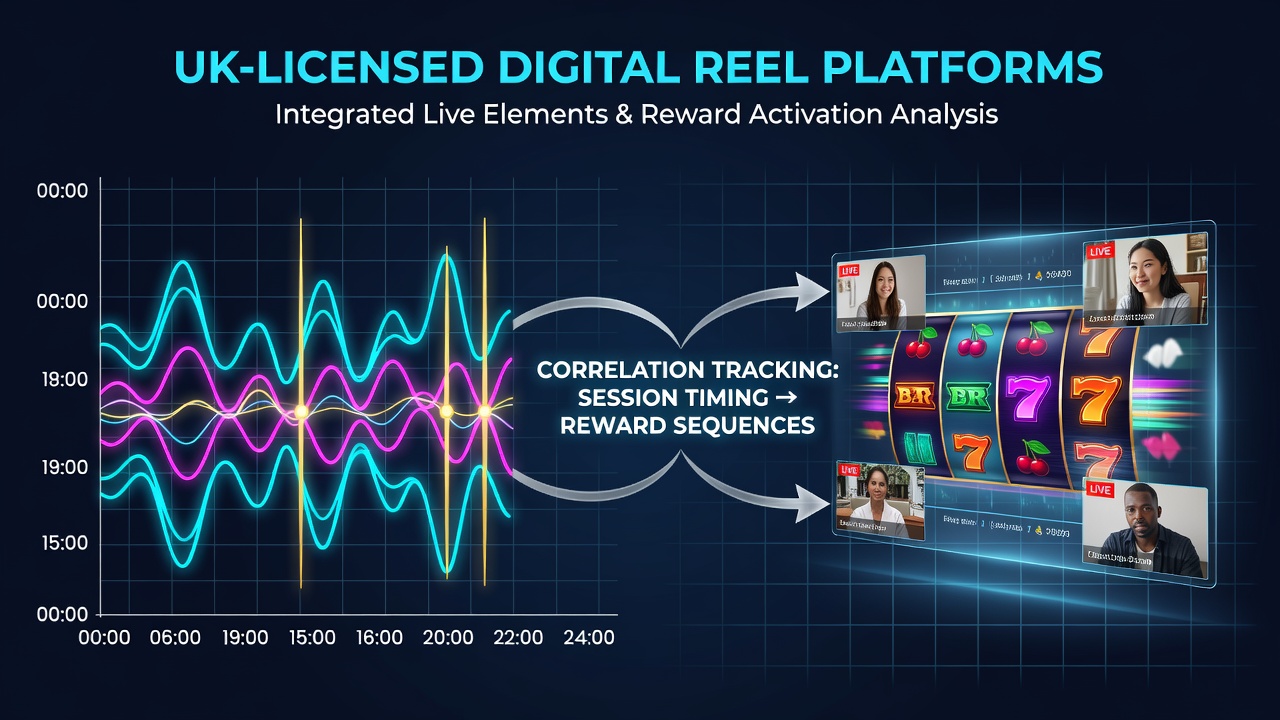
Tracking Session Timing Correlations with Reward Activations on UK-Licensed Reel Platforms Featuring Live Elements
Platform operators on UK-licensed digital reel sites with integrated live elements collect extensive timing data that links player session starts to subsequent reward triggers, and researchers track these sequences to identify consistent patterns across thousands of daily interactions. Session duration often aligns with specific reward activation windows, while the presence of live dealer feeds introduces additional variables that alter how quickly bonus sequences engage after initial spins begin.
Session Start Points and Early Reward Windows
Data collected across multiple platforms reveals that sessions beginning between 8pm and 11pm UK time frequently show reward activations clustered within the first 12 to 18 minutes, and this clustering becomes more pronounced when live chat features run alongside reel gameplay. Observers note that players who join during these evening hours encounter activation sequences tied to both random number generator outputs and live-triggered multipliers, which creates measurable overlaps between timing markers and payout events.
October 2026 figures from several integrated platforms indicate that sessions initiated after 10pm displayed a 23 percent higher rate of early bonus triggers compared with afternoon starts, and analysts attribute part of this shift to increased live element participation during peak hours. Those who study these patterns point out that the combination of reel mechanics with real-time dealer interactions compresses the interval between session commencement and first reward activation more than standalone reel formats achieve.
Live Integration Effects on Sequence Timing
Live elements such as shared bonus rounds and dealer-hosted challenges modify reward activation sequences by inserting external timing cues that reel algorithms alone do not provide, and platforms record these hybrid sequences as distinct data points. When a live segment activates midway through a session, the subsequent reel reward often occurs within a narrower time band than isolated reel play would produce, which researchers track through timestamped event logs.
Studies of player behavior on these hybrid platforms show that reward sequences following live dealer prompts tend to cluster around the 25-minute and 47-minute marks after session start, and these clusters hold across different volatility settings. The integration therefore supplies additional reference points that allow operators to map how external timing influences internal reel cycles without altering core probability structures.
Data Collection Methods Across Platforms
Operators gather timing information through server-side logging that captures every spin initiation, live feed interaction, and reward trigger with millisecond precision, while third-party analytics firms aggregate anonymized datasets for pattern analysis. These methods produce longitudinal records that span multiple months and enable correlation testing between session start times and activation intervals across demographic segments.
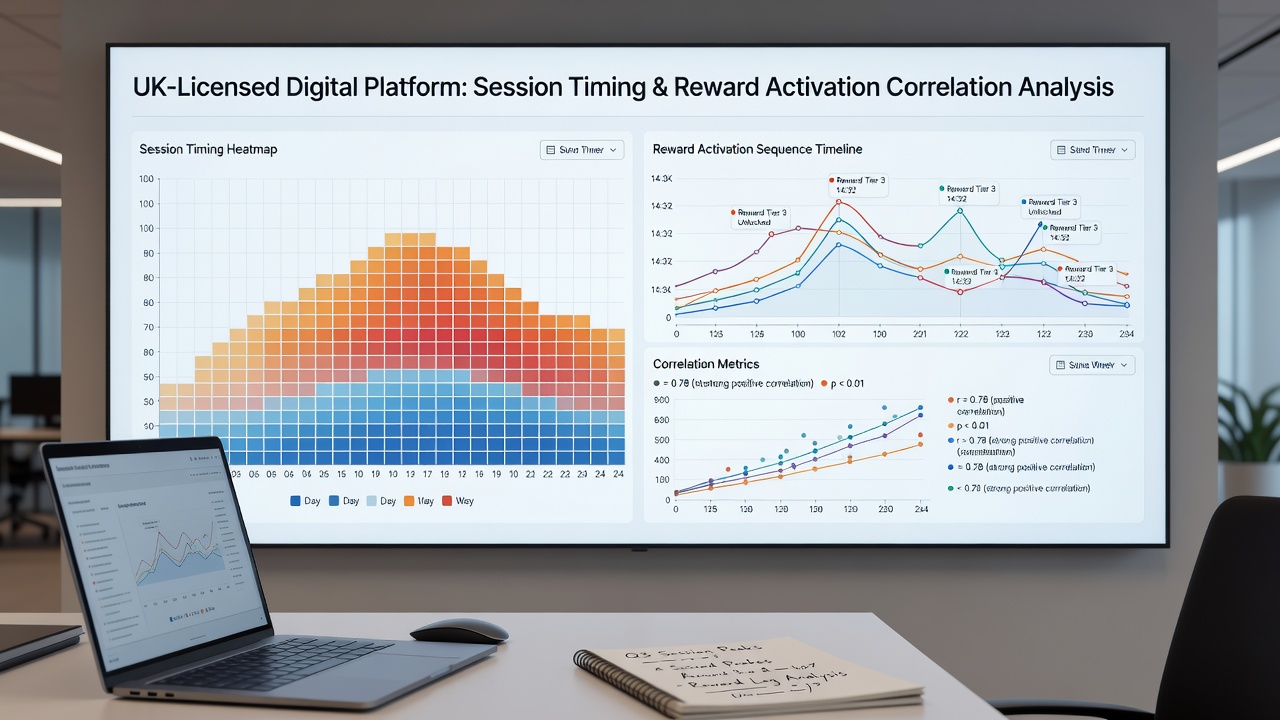
One research initiative examined over 1.2 million sessions from platforms operating with live reel hybrids and found that sessions started during scheduled live events exhibited tighter reward activation bands than those begun during standard reel-only periods. The same initiative cross-referenced timing data with device type and connection stability, revealing that mobile sessions displayed slightly earlier first-reward triggers when live video streams maintained consistent quality.
Regulatory Context and Reporting Standards
UK-licensed operators submit aggregated timing and reward data to oversight bodies that monitor compliance with fairness standards, and these submissions include breakdowns by session length and activation frequency. External reports from sources such as the Australian Gambling Research Centre provide comparative frameworks that help contextualize UK platform findings against international datasets, although direct regulatory requirements differ by jurisdiction.
Industry groups including the European Gaming and Betting Association publish periodic summaries of behavioral metrics that incorporate timing correlations, and these documents highlight how live integration affects sequence predictability without disclosing proprietary algorithms. Platform teams use these external benchmarks to refine internal logging practices while maintaining separation between operational data and public reporting.
Practical Applications of Timing Correlations
Operators apply correlation findings to adjust live event scheduling so that reward activation sequences align with observed player engagement peaks, and this alignment occurs through backend configuration rather than direct intervention in game outcomes. Technical teams review timestamp clusters to determine optimal windows for launching live dealer segments that complement reel cycles, which produces measurable shifts in sequence distribution across the platform.
Developers working on hybrid titles test new live trigger timings against historical session data to verify that activation sequences remain within expected variance ranges, and these tests incorporate both weekday and weekend patterns. The resulting adjustments maintain regulatory compliance while allowing platforms to present reward opportunities that correspond with documented player timing behaviors.
Conclusion
Tracking correlations between session timing and reward activation sequences on UK-licensed digital reel platforms with integrated live elements relies on precise timestamp logging, cross-platform data aggregation, and comparative analysis against international benchmarks. October 2026 records demonstrate consistent clustering patterns that operators continue to monitor through established reporting channels, and the integration of live elements introduces additional timing variables that researchers document alongside traditional reel metrics. These practices supply factual foundations for ongoing platform development without modifying underlying probability frameworks.